How Local SEO for Dentists and Dental Website Design Work Together
Finding a dentist online is now part of the patient journey. When people need a new dentist, they often search Google for terms such as “dentist near me” “dental clinic in my area,” or a specific treatment in their city.
This is where a strong website and local SEO can make a real difference.
A good website helps patients learn about your clinic, treatments, dentists, location, and appointment options. Local SEO helps people find your clinic when they search for dental services in their area.
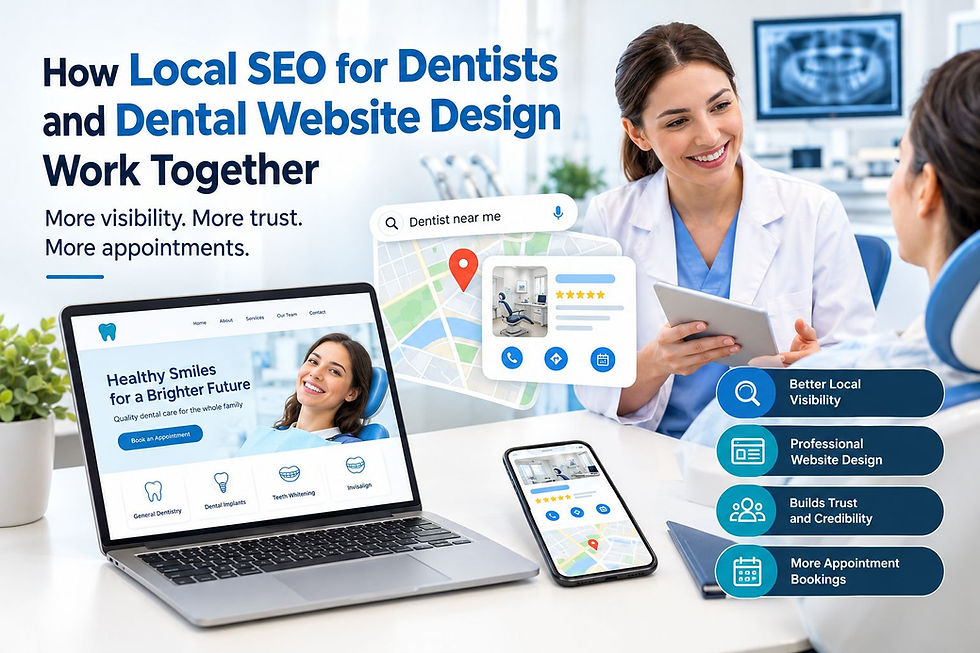
When these two work together, your dental practice can build a stronger online presence, attract local visitors, and turn website traffic into appointment enquiries.
What Is Dental Website Design?
Dental website design is the process of creating a website that meets the needs of a dental practice and its patients.
A dental website should do more than look professional. It should make it easy for visitors to understand your services and take the next step.
A patient should be able to answer simple questions within a few seconds:
What dental services do you offer?
Where is your clinic?
Who are your dentists?
What makes your clinic different?
How can I book an appointment?
Can I contact the clinic by phone or online?
A well-planned website can provide clear answers to all these questions.
Why Dental Website Design Matters
Your website is often one of the first places a potential patient visits after finding your clinic through Google.
If the website looks outdated, loads slowly, or makes it hard to find contact details, the visitor may leave and choose another clinic.
Good dental website design focuses on:
Simple navigation
Mobile-friendly pages
Clear service information
Strong calls to action
Fast page loading
Easy appointment booking
Dentist profiles
Clinic location and contact details
Patient reviews
Professional images
The goal is simple: help visitors find the information they need and make booking an appointment easy.
What Is Local SEO for Dentists?
Local SEO helps your dental practice appear in search results when people in your target area look for dental services.
For example, a patient may search:
Dentist near me
Dentist in Brisbane
Dental clinic near me
Emergency dentist Brisbane
Dental implants in Brisbane
Teeth whitening near me
These searches show strong local intent. The person is not just looking for information. They may be looking for a clinic they can visit.
Local SEO for dentists helps connect your practice with these local searches.
Google considers factors such as relevance, distance, and prominence when showing local results. Your Google Business Profile, reviews, business information, website content, and local signals all play a role.
Why Dental Website Design and Local SEO Should Work Together
A website and local SEO should not be treated as two separate marketing tasks.
Your website gives Google more information about your dental practice. It also gives patients a place to learn more after they find your business in search.
Think of the process like this:
Local SEO helps patients find you → Your website helps them trust you → A clear booking process helps them contact you.
If one part is weak, the whole journey can suffer.
For example, your Google Business Profile may bring a visitor to your website. But if the website does not clearly show your services, location, reviews, or booking options, that visitor may not become a patient.
How Dental Website Design Supports Local SEO
1. Your Location Should Be Clear
Google and patients need to know where your dental practice is located.
Your website should clearly show your:
Business name
Address
Phone number
Opening hours
Service areas
Clinic location
Map or directions
Your contact information should be easy to find on both desktop and mobile.
This information should also match your Google Business Profile and other business listings. Consistent name, address, and phone details can help search engines connect your business information across different sources.
2. Create Pages for Your Dental Services
Many dental websites list every treatment on one services page.
This can make the website harder to understand and can limit your ability to target specific searches.
Instead, create useful pages for your main services.
For example:
General Dentistry
Dental Implants
Teeth Whitening
Invisalign
Dental Crowns
Root Canal Treatment
Emergency Dentistry
Children's Dentistry
Each page should explain the treatment in simple language.
Include information about who may need the treatment, what the process involves, common questions, and how patients can book an appointment.
This structure also gives search engines clear information about what your clinic offers.
3. Build Location-Focused Content
Patients often search by suburb, city, or local area.
For example:
“dentist in Brisbane”
“dentist in Melbourne”
“dental clinic in Sydney”
A dental website can use location-focused content to make its service area clear.
However, avoid creating many pages with the same content and changing only the suburb name. Each location page should provide useful information that is relevant to that area.
4. Make Your Website Mobile-Friendly
A large number of people search for local businesses on their phones.
A patient searching for a dentist may be away from home, at work, or dealing with a dental problem. They need quick access to information.
Your website should work well on small screens.
Buttons should be easy to tap. Text should be easy to read. Phone numbers should be clickable. Forms should be simple.
A mobile-friendly website improves the patient experience and supports your wider SEO strategy.
How Local SEO Supports Your Dental Website
Local SEO does not stop at your website.
Your Google Business Profile is an important part of local visibility. It can show your practice name, location, opening hours, reviews, photos, services, and website link in Google Search and Maps.
Optimise Your Google Business Profile
Make sure your profile contains accurate and complete information.
Check your:
Business name
Main category
Address
Phone number
Website
Opening hours
Services
Photos
Appointment link
Keep the information updated when something changes.
Build Genuine Patient Reviews
Reviews can influence how people view your dental practice.
A patient who sees positive and genuine reviews may feel more comfortable booking an appointment.
Ask satisfied patients to leave honest reviews. Respond to reviews in a professional and helpful way.
Never create fake reviews or offer rewards for positive reviews.
Keep Your Business Information Consistent
Your clinic may appear on Google, social media, healthcare directories, local directories, and other websites.
Your business name, address, and phone number should be consistent across these platforms.
If your website shows one address while another directory shows an old address, patients may become confused.
Consistent information also helps search engines understand your business.
The Role of Websites for Dentists in Patient Conversion
Good websites for dentists should focus on both visibility and patient experience.
Getting traffic is only one part of the process.
The next question is:
What happens after someone visits your website?
Your website should guide visitors toward a clear action.
For example:
Book an Appointment
Call Our Clinic
Request an Appointment
Contact Our Dental Team
Place these actions in useful areas of the website.
Do not make visitors search through several pages to find your phone number or booking form.
Important Features of Dental Clinic Website Design
A strong dental clinic website design should include the features patients need most.
Clear Dentist Profiles
Introduce the dentists and clinical team.
Include their names, qualifications, areas of interest, experience, and professional photos.
This can help patients feel more comfortable before their first visit.
Treatment Information
Give each major treatment its own useful page.
Explain complex dental topics in simple terms. Avoid heavy medical language when it is not needed.
Patient Reviews
Add genuine patient feedback where appropriate.
Reviews can help new visitors understand the experience other patients have had with your clinic.
Easy Contact Options
Make it simple to contact your practice.
Include phone, email, appointment forms, and other contact methods that your clinic uses.
Clinic Photos
Use real photos of your clinic, team, reception area, treatment rooms, and facilities.
Real images can give visitors a better idea of what to expect when they arrive.
Common Mistakes to Avoid
Using Too Many Keywords
Do not repeat keywords in every paragraph.
Google and patients need useful content, not keyword-filled text.
Use terms such as dental website design, dental clinic website design, websites for dentists, and local seo for dentists where they fit naturally.
Hiding Contact Information
Do not make patients search for your phone number or address.
Your contact information should be easy to find.
Using One Page for Every Service
A single services page may not provide enough information for each treatment.
Create separate pages for important treatments when they have different patient needs and search intent.
Ignoring Local Search
A beautiful website will not reach its full potential if your local search presence is weak.
Your website, Google Business Profile, reviews, business listings, and local content should support the same business information.
How to Build a Strong Dental Online Presence
A simple strategy can help bring everything together.
Step 1: Build a Patient-Friendly Website
Start with a clean, mobile-friendly website that explains your clinic and services.
Step 2: Create Useful Service Pages
Give your main treatments their own pages with clear and helpful information.
Step 3: Optimise Your Google Business Profile
Make sure your business details, services, photos, hours, and booking information are accurate.
Step 4: Build Local Trust
Collect genuine patient reviews and maintain consistent business information across relevant platforms.
Step 5: Track Results
Monitor website traffic, calls, appointment enquiries, search rankings, and Google Business Profile performance.
Use these insights to improve your website and local SEO strategy over time.
Final Thoughts
Dental website design and local seo for dentists work best when they support the same goal: helping local patients find your practice, learn about your services, trust your team, and book an appointment.
Your website gives patients the information they need. Local SEO helps bring the right people to that website.
A strong dental clinic website design should be easy to use, mobile-friendly, informative, and focused on patient needs. At the same time, websites for dentists should work with Google Business Profile optimization, local content, reviews, and consistent business information.

Comments